 Skip to content
 If you have been staring at stubborn dark spots in the mirror, wondering if anything will actually fade them, you are not alone. The short answer is yes, chemical peels can meaningfully fade hyperpigmentation for most people. At Royalty Wellness Spa, we walk you through what to expect realistically.
Chemical peels treat dark spots, melasma, & uneven tone by removing damaged surface skin so fresh, evenly pigmented skin can surface. The peel solution loosens built-up cells carrying excess melanin, then gently exfoliates them away.
Hyperpigmentation happens when your skin overproduces melanin, the pigment that gives skin its color. When certain areas make too much, you get patches that sit darker than the skin around them. It is incredibly common and nothing to feel self-conscious about, but it can be frustrating when it refuses to budge.
Part of what makes dark spot removal tricky is that not all pigment is the same. The three most common types behave very differently. Post-inflammatory hyperpigmentation shows up as dark marks left behind after acne, a bug bite, or any irritation.
Melasma appears as larger patches driven by hormones & heat, often across the cheeks, forehead, or upper lip. Sun spots come from years of accumulated sun exposure. This is also why drugstore creams so often stall out.
Many only work at the very surface, so they can lighten fresh, shallow marks but struggle with deeper or older pigment. A peel reaches further, which is where real hyperpigmentation treatment begins. Just know upfront that the type of pigment you have shapes the outcome.
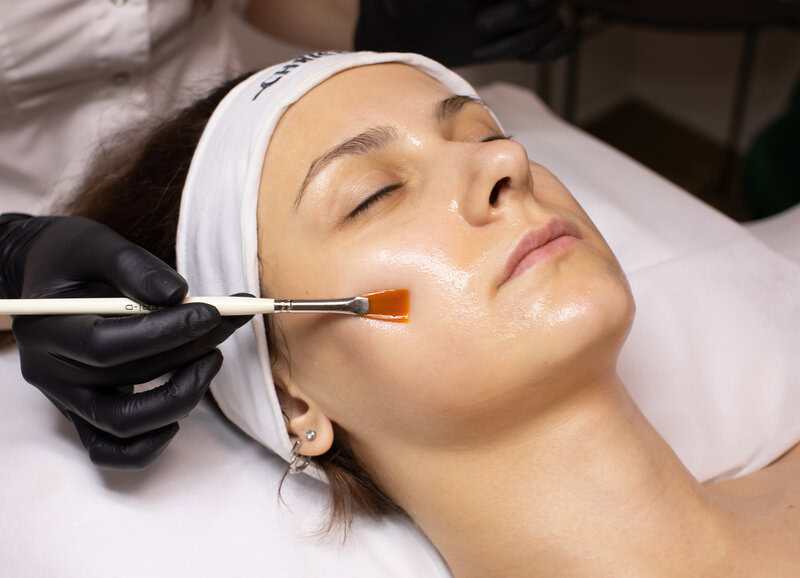
A chemical peel treatment works by applying a controlled acid solution to the skin. That solution loosens and sheds the outer layers where a lot of unwanted pigment lives. As those tired, pigment-loaded cells slough away, fresh and more even skin comes forward, and clustered pigment lifts away with them.
There is a bonus effect too. Peels nudge your skin’s natural cell turnover and encourage collagen, so over time your tone looks brighter & your texture smoother, not just lighter in one spot. Not every peel is the same, though, and that is a good thing. Different acids do different jobs. Glycolic and lactic acids gently resurface and brighten.
Salicylic acid works well when clogged pores & pigment show up together. Mandelic acid is a gentle, non-irritating option often chosen for melasma & richer skin tones. Stronger TCA-based peels reach deeper, more set-in pigment. Matching the right acid to the right concern is the whole game.
Here is the honest part. Chemical peels work beautifully for some pigment & require more patience for others.
Sun spots and surface-level post-inflammatory marks tend to respond the fastest, since that pigment is closer to the surface and easier to lift. Melasma is where expectations matter most. It can improve nicely with peels, but it is a relapsing condition tied to hormones and heat, so it usually needs an ongoing control plan rather than a single fix.
Deeper or older pigment often takes more sessions or a combined approach to see the change you want. At Royalty Wellness Spa, this is exactly why your peel is never one-size-fits-all.
The practice offers Image Peels, which range from gentle enzymatic options to more advanced resurfacing, and the Perfect Derma Peel. This medium-depth peel blends TCA, salicylic, retinoic, and kojic acids with vitamin C and glutathione to target uneven tone and dark spots. Which one suits you is decided after a detailed consultation, based on your specific concern and skin type.
Most people notice brighter, more even tone within a few days to a couple of weeks, as the treated skin finishes renewing. That first glimpse of fresher skin is genuinely encouraging.
That said, peels are not magic, and honesty serves you better than hype. A series almost always outperforms a single session. Many people do best with a few peels spaced about a month apart, followed by occasional maintenance treatments to hold their results.
Improvement is gradual and varies from person to person depending on pigment type, skin, and how consistent you are afterward. Think of it as steady progress rather than an overnight erase.
If you have deeper skin, you have probably been burned before by treatments that made pigment worse instead of better. That concern is valid. Richer skin tones, roughly Fitzpatrick types IV to VI, are more prone to post-inflammatory hyperpigmentation when a peel is too aggressive.
The reassuring news is that this is very manageable in experienced hands. Gentler acids and a more conservative depth are often the safer and smarter path for deeper skin tones, offering gradual improvement while lowering the risk of new marks.
This is precisely why provider expertise matters more than peel strength. A trained skincare specialist at Royalty Wellness Spa assesses your skin first and chooses accordingly, rather than reaching for the strongest option on the shelf.
What you do after your peel matters just as much as the peel itself. Daily SPF is truly non-negotiable, because sun exposure re-triggers the very pigment you are working to fade. Skipping it can undo your progress.
Beyond sun protection, a little gentle care goes a long way:
Consistency and patience genuinely beat chasing one dramatic session. Small, steady steps protect your results.
So, do they really work? For most people, yes, when the peel is matched to your pigment type and skin tone and supported by daily SPF and a little maintenance. The right chemical peel treatment is chosen after a real skin evaluation, not picked off a menu.
Royalty Wellness Spa offers customized Chemical Peels in Memphis, TN, designed around your skin and your goals by licensed specialists who take your concerns seriously. Ready for clearer, more even skin? Book Your Chemical Peel Consultation Today!